

View count:
94
Login Dept. of Aeronautical Engineering, NFU
Login Dept. of Aeronautical Engineering, NFU
Unmanned Aerial Vehicles (UAVs), commonly known as drones, represent an innovative type of aircraft that utilizes autopilot systems and route planning technologies to control both fixed-wing and rotary-wing platforms. In recent years, multi-rotor drones have driven transformative changes across many industries, enabling the completion of tasks that were previously difficult or impossible. UAVs play a critical role in national defense today and are expected to remain significant in the future. They are also widely applied in civilian fields such as aerial photography and mapping, agricultural crop monitoring and spraying, disaster search and assessment, scientific research, logistics, and entertainment. These applications align with Taiwan’s Six Core Strategic Industries, particularly those related to national defense and strategic technologies, while also connecting with the information and digital industries as well as civil and emergency preparedness sectors.
UAVs are extensively used in defense, commercial operations, and government land management. They are especially well known for their deployment in military missions such as border surveillance. UAV technology is also closely linked with emerging fields such as smart agriculture and AI innovation. Operating UAVs requires highly specialized professional skills. With the integration of advanced technologies such as artificial intelligence, sensing and obstacle-avoidance systems, and cloud computing, UAV capabilities have been significantly enhanced. Modern drones can autonomously perform tasks including takeoff, navigation, data collection, data transmission and analysis, and landing.
According to a market forecast report by MarketsandMarkets, the global UAV shipment volume reached 67.9 million units with a market value of USD 27.4 billion in 2021. The market is expected to grow to USD 58.4 billion by 2026, with a compound annual growth rate (CAGR) of 16.4%. In addition, the “Evaluation Report on the Industrial Benefits of UAV Talent Cultivation” commissioned by this university and conducted by the Taiwan Institute of Economic Research estimates that Taiwan will require an additional 121, 136, and 147 UAV R&D engineers in 2021, 2022, and 2023 respectively. Furthermore, the annual demand for UAV operational personnel is estimated to reach approximately 8,521 individuals, including around 4,797 professional operators.
The report also indicates that the UAV industry encompasses key technological fields including vehicle design, flight control systems, control chips, information transmission, operation software, system integration, training programs, and application services. Relevant career opportunities include UAV mechanical design engineers, UAV equipment engineers, UAV system engineers, UAV maintenance engineers/technicians, UAV electric drive engineers, UAV R&D test engineers, UAV flight control system engineers, UAV software engineers, UAV communication engineers, and professional UAV pilots.
In September 2011, then-Premier Su announced the establishment of the Chiayi Science Park, focusing on the development of smart vehicles and precision agriculture industries related to UAV technology. By the end of 2011, a development budget of NT$8.5 billion had been approved. Through this project, the UAV teams at this university and partner institutions will cultivate professional talent and establish strong research capabilities to support the future development of Chiayi Science Park. In particular, the former Chiayi campus of National Taiwan University of Sport is currently being operated by this university. The recent Russia-Ukraine conflict has also demonstrated the strategic importance of UAVs in modern warfare. Ukraine has effectively utilized drones to carry out surprise attacks against tanks and artillery positions, highlighting the critical role UAVs play in national defense. In the foreseeable future, UAV technology will remain a highly significant and rapidly growing industry.
The Department of Aircraft Engineering at this university possesses a solid foundation in aircraft design and maintenance, as well as a Civil Aeronautics Administration (CAA) certified aviation maintenance training center. These resources provide strong support for UAV design, manufacturing, and maintenance. Based on these advantages and responsibilities, the development objective of this project is to cultivate professional talent for the UAV industry and technological development. Building upon the department’s existing strengths in aircraft design, maintenance, and manufacturing, the program focuses on UAV development while simultaneously implementing a dual-base talent cultivation plan. This plan integrates the High-Speed Rail training base of National Formosa University in Huwei to enhance civil and military aircraft maintenance capabilities. At the same time, a Chiayi UAV base centered on UAV research and development will be established to train professionals in the design, assembly, manufacturing, testing, maintenance, and operation of both fixed-wing and multi-rotor UAVs.
To meet the talent demands of UAV industry and technological development, this project adopts several approaches beginning with strengthening students’ fundamental knowledge. Through engineering-related areas such as aircraft systems, aviation component overhaul, aviation non-destructive inspection, aviation virtual training materials, UAV design, UAV power systems, and autonomous flight technologies, the program will offer an Aviation Maintenance Bachelor Program, advanced aircraft courses, an interdisciplinary UAV technology program, and short-term UAV technical training courses to achieve these objectives.
Leveraging the department’s expertise in aircraft design, manufacturing, and maintenance, the program supports the development of UAV technologies. The implementation site will be the Chiayi Asia UAV AI Innovation Application R&D Center. After discussions with resident companies, specialized training courses related to UAV system technologies will be developed. The project will also establish a shared UAV R&D equipment laboratory and a UAV testing and inspection center. Equipment procurement will be planned accordingly, and the project will be jointly implemented by National Formosa University, partner institutions, and industry experts to promote talent cultivation and industry–academia collaboration.
A 24-credit Interdisciplinary UAV Technology Program will be designed for enrolled students, while eight professional technical courses will be provided to enhance the skills of industry professionals. Internship and employment opportunities will also be matched with trained participants. Through these initiatives, the program aims to meet the UAV industry’s demand for expertise in areas such as vehicle design, flight control systems, information transmission, operational software, system integration, training, and application services.
This project focuses on the development of the UAV industry. The Asia UAV AI Innovation Application R&D Center located in Puzi City, Chiayi County serves as a hub for UAV intelligent research and development, while the International Aircraft Maintenance Hangar at the Yunlin High-Speed Rail Campus of National Formosa University provides a practical training environment for aviation maintenance. The primary objective of the project is to cultivate professional talent for Taiwan’s UAV industry and strengthen the connection between academic education and industrial technology, thereby reducing the gap between academic training and industry needs.
This project builds upon the university’s previous implementation of aerospace maintenance training programs and the Ministry of Education’s Technical and Vocational Education Reform initiatives. By integrating the research capabilities of the Department of Aircraft Engineering and other departments within the College of Engineering, the project incorporates advanced technologies in UAV systems and artificial intelligence to enhance Taiwan’s UAV manufacturing capabilities and advanced aircraft maintenance technologies.
UAV technology and its applications represent a highly integrated technological industry that requires the combination of multiple key technologies, including microcomputer systems, information and communication technology, artificial intelligence, smart Internet of Things (IoT), power and energy applications, and mechatronics integration. Through comprehensive curriculum planning, interdisciplinary programs, and improved teaching environments that align with industry practices, this project aims to systematically integrate fundamental theories with applied technologies.
By connecting the local UAV intelligent R&D cluster with an innovative aviation maintenance training environment, the project seeks to cultivate professional technical talents specializing in intelligent UAV applications and strengthen collaboration between academia and industry. In response to the current development of the UAV industry, this project will train professional R&D and technical personnel for related industries, actively expand connections with emerging application sectors, promote industry–academia collaboration and technology transfer, and address the urgent demand for highly skilled technical professionals in Taiwan’s UAV industry.
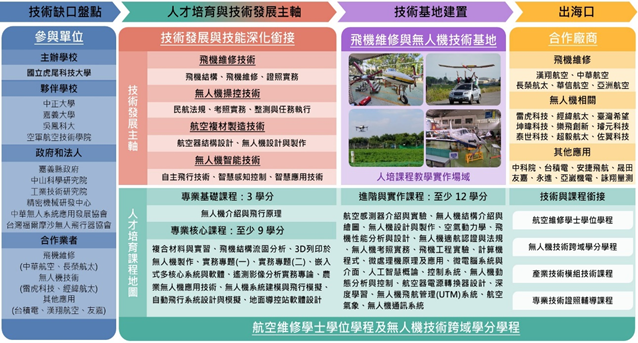
Figure 1. Project framework and the industry–academia collaboration model for talent cultivation and technological development.
With the global UAV industry increasingly expanding into the civilian market, applications such as UAV cargo transportation (logistics) and passenger air taxis have become important development directions. These applications are also driving the trend toward larger UAV platforms. In the foreseeable future, the design, manufacturing, maintenance, operation, and inspection systems for large UAVs will become increasingly similar to those of manned aircraft. In addition, the military demand for larger UAV systems (such as the Teng Yun UAV) further highlights the need for advanced UAV maintenance capabilities. This development represents a new opportunity for National Formosa University in the field of civil aviation maintenance technology and talent cultivation.
Building upon the university’s existing aircraft maintenance team and supported by a specialized UAV faculty team, the university is capable of expanding from small UAV applications toward the maintenance and development of large UAV systems. National Formosa University has been engaged in UAV-related technology research and development for more than 15 years. Significant achievements have been made in areas such as the design and construction of a 5-meter wingspan long-endurance solar-powered UAV, multi-rotor UAV design and development, multi-rotor UAV formation flight performances, UAV ground control stations, UAV power conversion systems, and intelligent UAV control technologies. Applications have also been developed in bridge inspection, livestock management, AI-based image recognition, and agricultural monitoring. The faculty members involved in these research areas are listed in Table 1.
Furthermore, as shown in Table 2, the project collaborates with the Chiayi County Government as well as organizations and UAV companies located at the Chiayi UAV base, including the National Chung-Shan Institute of Science and Technology (NCSIST), Taiwan Institute of Economic Research (TIER), Taiwan Unmanned Systems Development Association (TUSDA), Thunder Tiger Technology, GEOSAT Aerospace & Technology, Field Tech, Taisys, and Sky Flight. With the guidance of these industry experts, the program conducts industry-oriented practical training and collaborative research projects, establishing a production-line-style UAV training environment and internship-to-employment pathways. The university also provides technical consultation and short-term professional training programs for UAV companies.
The project additionally invites partner universities in Chiayi and Taichung—including National Chung Cheng University, National Chiayi University, Wufeng University, and Chaoyang University of Technology—to support the development of UAV-related technologies and talent cultivation. These partner institutions contribute expertise in areas such as UAV applications in firefighting and artificial intelligence technologies.
The Department of Aircraft Engineering currently has 28 full-time faculty members specializing primarily in civil aviation maintenance and UAV technologies. Based on teaching and research areas, the faculty includes 8 members specializing in aircraft manufacturing and maintenance, 8 members specializing in UAV technologies, and 12 members whose expertise spans both fields. UAV-related specialties include aerodynamics analysis, structural mechanics, composite materials, integrated testing and flight testing, and UAV regulations. Avionics-related expertise includes artificial intelligence, flight control and navigation, system integration, wireless communications, power electronics, microcomputer systems, and remote sensing technologies. In addition, faculty members from other departments within the university who are actively engaged in UAV-related projects are also involved in this program.
For areas where additional expertise is required, such as aviation management and UAV pilot certification training, external specialists will be invited. Partner universities provide eight supporting faculty members, while four instructors come from research institutes and industry experts.

The minimum requirement for this program is 20 credits, including 5 credits of fundamental core courses, 12 credits of interdisciplinary professional module courses, and 3 credits of practical training courses. At least 6 credits of the program courses must not belong to the student’s major department, minor, or other program requirements. The detailed curriculum structure of the program is shown in Table 1.
Table 1. Curriculum for the Interdisciplinary UAV Program
| Category | Course Title | Credits | Recommended Year | Remarks |
| Fundamental Core Courses | Introduction to Unmanned Aerial Vehicles | 2 | 1st Year (Spring) | Minimum 5 credits required |
| Principles of Flight | 2 | 1st Year (Fall) | ||
| UAV Regulations and Pilot Certification Practice | 3 | 2nd Year (Spring) | ||
| UAV Electronic Communication Systems | 3 | 3rd Year (Fall) | ||
| National Defense Education: Defense Technology (UAV) | 1 | 2nd Year (Fall) | ||
| Module I: Flight Operation Technology | UAV Traffic Management (UTM) Systems | 3 | 3rd Year (Spring) | At least 12 credits from two modules are required. At least 6 credits must be from the major module. Students in Module I must obtain a basic UAV operator certification. |
| Fixed-Wing UAV Flight Mechanics and Operation | 3 | Automation Engineering | ||
| Multi-Rotor UAV Pilot Certification Practice | 3 | 2nd Year (Spring) | ||
| Unmanned Helicopter Pilot Certification Practice | 3 | 3rd Year (Spring) | ||
| VTOL UAV System Design and Operation | 3 | 4th Year (Fall) | ||
| Module II: System Design and Integration | Introduction to Aviation Sensors and Laboratory | 3 | 1st Year (Fall) | |
| UAV Testing, Evaluation, and Mission Execution | 3 | 3rd Year (Spring) | ||
| Autonomous Flight System Design and Simulation | 3 | 3rd Year (Spring) | ||
| UAV Flight System Integration Design | 3 | 3rd Year (Spring) | ||
| Ground Control Station Software Design | 3 | 4th Year (Spring) | ||
| Module III: Intelligent Application Technologies | Introduction to Artificial Intelligence | 3 | 2nd Year (Fall) | |
| Intelligent UAV Application Technologies | 3 | 2nd Year (Spring) | ||
| UAV Aerial Photography and Surveying Applications | 3 | 4th Year (Fall) | ||
| UAV Remote Sensing Image Analysis Practice | 3 | 3rd Year (Spring) | ||
| UAV Modeling and Flight Simulation | 3 | 4th Year / Graduate | ||
| Module IV: Vehicle Design and Manufacturing | Computer-Aided Design (CAD) | 3 | 1st Year | |
| Composite Materials and Laboratory | 3 | 3rd Year (Fall) | ||
| UAV Design and Manufacturing | 3 | 3rd Year (Fall) | ||
| Aircraft Performance Analysis and Design | 3 | 4th Year (Fall) | ||
| Aircraft Structural Design and Engineering Analysis | 3 | 4th Year (Fall) | ||
| Practical Training Courses | UAV Applications and Technology Seminar | 3 | 4th Year (Spring) | Minimum 3 credits required |
| UAV Practical Project (I) | 3 | 3rd Year (Spring) | ||
| UAV Practical Project (II) | 3 | 4th Year (Fall) | ||
| Industry Internship (Semester) | 3 | 4th Year (Spring) |
Program curriculum and minimum credit requirement: The minimum number of credits required for this program is 11 credits. The detailed curriculum structure is shown in the table below.
Table 1. Curriculum for the UAV Interdisciplinary Micro Program
| Category | Course Title | Type | Credits |
| Fundamental Core Courses | Introduction to Unmanned Aerial Vehicles | Elective | 2 |
| Principles of Flight | Elective | 2 | |
| UAV Regulations and Pilot Certification Practice | Elective | 3 | |
| National Defense Education: Defense Technology (UAV) | Elective | 1 | |
| Module I: Flight Operation Technology | UAV Traffic Management (UTM) Systems | Elective | 3 |
| Fixed-Wing UAV Flight Mechanics and Operation | Elective | 3 | |
| Multi-Rotor UAV Pilot Certification Practice | Elective | 3 | |
| Unmanned Helicopter Pilot Certification Practice | Elective | 3 | |
| VTOL UAV System Design and Operation | Elective | 3 | |
| Module II: System Design and Integration | Introduction to Aviation Sensors and Laboratory | Elective | 3 |
| UAV Testing, Evaluation, and Mission Execution | Elective | 3 | |
| Autonomous Flight System Design and Simulation | Elective | 3 | |
| UAV Flight System Integration Design | Elective | 3 | |
| Ground Control Station Software Design | Elective | 3 | |
| Module III: Intelligent Application Technologies | Introduction to Artificial Intelligence | Elective | 3 |
| Intelligent UAV Application Technologies | Elective | 3 | |
| UAV Aerial Photography and Surveying Applications | Elective | 3 | |
| UAV Remote Sensing Image Analysis Practice | Elective | 3 | |
| UAV Modeling and Flight Simulation | Elective | 3 | |
| Module IV: Vehicle Design and Manufacturing | Computer-Aided Design (CAD) | Elective | 3 |
| Composite Materials and Laboratory | Elective | 3 | |
| UAV Design and Manufacturing | Elective | 3 | |
| Aircraft Performance Analysis and Design | Elective | 3 | |
| Aircraft Structural Design and Engineering Analysis | Elective | 3 |